


Mentorship is among the most impactful experiences anyone can have. Whether formal or casual, a well-timed conversation, a thoughtful introduction or a single piece of advice can open doors that might otherwise remain closed. In industries as relationship-driven as commercial real estate, those moments often make the difference between navigating a path and accelerating along it.
But what makes mentorship truly meaningful is reciprocity. A mentee can learn while also sharing their own insights, and today, learning goes both ways. Fresh talent is reshaping the industry, bringing new ideas and new energy to the table, and pushing veterans to adapt to an era defined by technology and innovation. Generated artificial intelligence can answer almost any question and even act as a mentor if we told it to be, but even though technology certainly makes life easier—where would any of us be without Google Maps?—human connection remains irreplaceable.
Real estate is, at its core, a people business built on relationships, negotiation and trust. Learning how to operate within that environment cannot be outsourced to an algorithm as it requires lived experience and shared insight. That is where structured mentorship plays a critical role. The Goldie Initiative, founded in 2007 by Goldie B. Wolfe Miller, has built a professional community dedicated to advancing women in commercial real estate.
The program pairs senior industry leaders with emerging talent, fostering guidance, advocacy and long-term connection in a field where women remain underrepresented. Its mission is to prepare women for senior leadership roles in all sectors of commercial real estate. How does that translate into practice? We spoke with four mentor-mentee pairs and what we found is not just a program, but a network—one where experience is shared, confidence is built and the next generation is prepared to lead.
Nicole Pecoulas & Junzhou (Jojo) Cui
Nicole Pecoulas, a managing director & senior investment officer at Barings, has been with The Goldie Initiative ever since its inception. Because she did not have access to a formal mentorship structure early in her own career, she views the program as more than a pairing exercise. It’s a way to provide the sustained guidance and candid feedback she once lacked.
“Every mentee I have worked with has been exceptional (…) I often say they are the daughters I never had, and I am so proud of each of them,” she told Commercial Property Executive.

Her current mentee, Junzhou (Jojo) Cui, is pursuing her MBA at the University of Chicago Booth School of Business. Cui’s interest in real estate is rooted in expanding access and opportunity for new immigrants. She joined The Goldie Initiative seeking a network that genuinely supports women navigating the industry.
“(Nicole) understands my background and has experience mentoring international students,” Cui said. “The level of consideration created trust from day one.”
That trust quickly evolved into something deeper than periodic check-ins. Over time, Pecoulas’ mentorship has shaped how Cui approaches decision-making and professional presence. Beyond technical advice, their conversations have focused on navigating relationships, how to network thoughtfully, how to ask meaningful questions and build connections that feel authentic.
“I wondered whether I would ask the right questions and how to make the connection meaningful rather than transactional, but Nicole made it feel effortless,” Cui said.
For Pecoulas, strong mentorship depends on mutual trust and consistent communication. For Cui, it requires openness, knowing when to ask for guidance and being willing to absorb honest feedback. Together, they describe a relationship built on candor rather than formality. Doors open when people ask questions, seek guidance and speak up.
“It is a dynamic, relationship-driven industry where you can build meaningful impact and long-term careers,” Pecoulas said. “Find your passion. Understand your strengths. Then pursue it with confidence.”
Carrie Szarzynski & Bretagne Ball

With more than three decades in commercial real estate, Carrie Szarzynski, executive managing director at Hiffman National, has built a career overseeing capital planning, property management and construction across complex portfolios. After volunteering with The Goldie Initiative in several capacities, she stepped into a formal mentorship role, bringing that experience to the next generation.
Today, she mentors Bretagne Ball, an MBA candidate at the University of Illinois Urbana-Champaign’s Gies College of Business. Ball’s path into commercial real estate reflects a multidisciplinary background in education, design and property operations, along with a commitment to expanding access for women and people of color in the industry.
When Ball first learned about The Goldie Initiative while working at LivCor, she did not fully grasp the breadth of support available to Goldie Scholars. That perspective shifted quickly. Szarzynski became not only a source of guidance, but also a connector, introducing her to senior leaders and exposing her to opportunities that accelerated her professional development.
For Szarzynski, mentorship requires structure as much as inspiration. It is easy for conversations to drift, she noted, so setting clear goals and maintaining consistent touchpoints is essential. By helping her mentee explore different facets of commercial real estate without the pressure to have immediate answers, she has created space for Ball’s thoughtful growth.
“When both mentor and mentee are engaged and intentional, the relationship becomes a powerful tool for growth and development,” Ball said.
That intentionality extends beyond scheduled meetings. In an industry built on relationships, Szarzynski believes growth often begins with stepping into unfamiliar rooms and initiating conversations, even when it feels uncomfortable.
“Those relationships and experiences will open doors you may not even realize exist,” Ball agreed.
Carolyn Pianin & Irina Chochua
Carolyn Pianin and her mentee, Irina Chochua, shared a Cornell University connection even before their mentorship formally began. Chochua is pursuing her master’s in real estate at Cornell, while Pianin earned her MBA from the university’s Johnson School of Management. That academic overlap became a foundation, but it was Pianin’s industry reach that proved transformative.
Beyond The Goldie Initiative, Pianin mentors through WXNYRE, ULI and Wellesley in Commercial Real Estate, which she founded more than a decade ago. For Chochua, who grew up in Georgia—a country at the crossroads of Eastern Europe and Western Asia—the transition into the U.S. commercial real estate market felt daunting. But the Goldie scholarship provided entry into a professional community, while Pianin helped her navigate it. In fact, she did more than offer advice. She actively leveraged her network, introducing Chochua to industry peers.
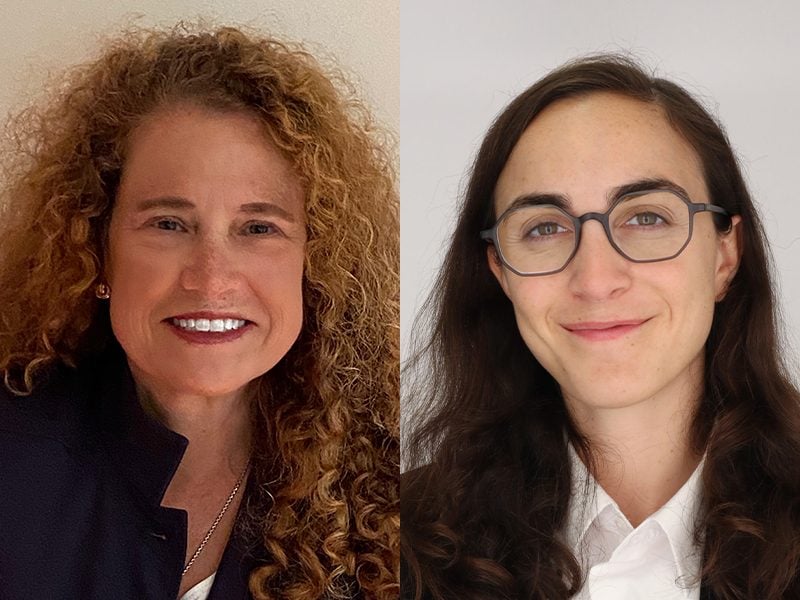
“My mentors are very well connected, and once they introduce you to a few people, those people introduce you to others, and it becomes like a geometric progression,” Chochua said. The relationship works because of mutual respect—being prepared, staying consistent and valuing her mentor’s time.
For Pianin, meaningful mentorship extends beyond formal programming. Regular, intentional engagement outside structured events is what turns guidance into lasting connection.
“What started between a senior executive and a junior person can grow into amazing friendships and important networks years later for both the mentor and mentee, and that’s what makes this fun and interesting,” Pianin added.
Their advice to women entering commercial real estate reflects that same proactive spirit: Stay curious, ask questions and pursue opportunity rather than waiting for it.
“There are strong women leaders who are willing to support and guide you. Learn from them, stay technically strong, and believe that you belong in the room,” Chochua said.
Suzanne Martinez & Christine Kim

Suzanne Martinez, head of North America Global Investors Group at Affinius Capital, credits much of her own career growth to mentors who invested in her early. Her involvement in The Goldie Initiative is, in many ways, an extension of that experience, a commitment to paying forward the guidance she once received.
Her mentee, Christine Kim, is pursuing an MBA at Columbia Business School with a focus on leadership and real estate. Outside the classroom, she leads and volunteers with nonprofit organizations including Redefine Her Street and the Korea Finance Society. To her, The Goldie Initiative is more than networking—it is what she calls the gold standard for female-focused support in commercial real estate.
The broader job market, however, has introduced new challenges. With internships and post-graduate roles becoming more competitive, mentorship increasingly extends beyond advice into advocacy. That’s where Martinez’s role becomes particularly impactful. In a tight hiring environment, she sees mentorship as a bridge between talent and opportunity.
“While mentees are looking for opportunities, companies are looking for strong talent. Where you can help make that match, it’s a win for everyone,” Martinez said.
For Kim, the most valuable lessons go deeper than introductions. Learning from Martinez means observing how she navigates professional pressure and personal circumstances with composure and clarity.
“It reminds me that leadership is not just about executing deals, it’s about resilience, perspective and integrity over time,” Kim said.
Resilience, Martinez acknowledges, is essential in an industry where women may often hear “no.” That friction becomes a training ground, building confidence and perspective while reinforcing the importance of treating every colleague with respect.
“The most successful teams work toward a shared goal, much like the championship Chicago Bulls teams of the ’90s—success wasn’t just about one star player, but about everyone understanding their role and working together,” Martinez said.
That team mindset extends to community. Success in commercial real estate requires more than individual drive, you need to “find your village”, as Kim puts it. Having a support system made up of women walking a similar path is critical in an industry that can often feel demanding or isolating.